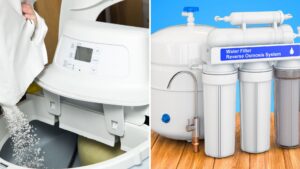

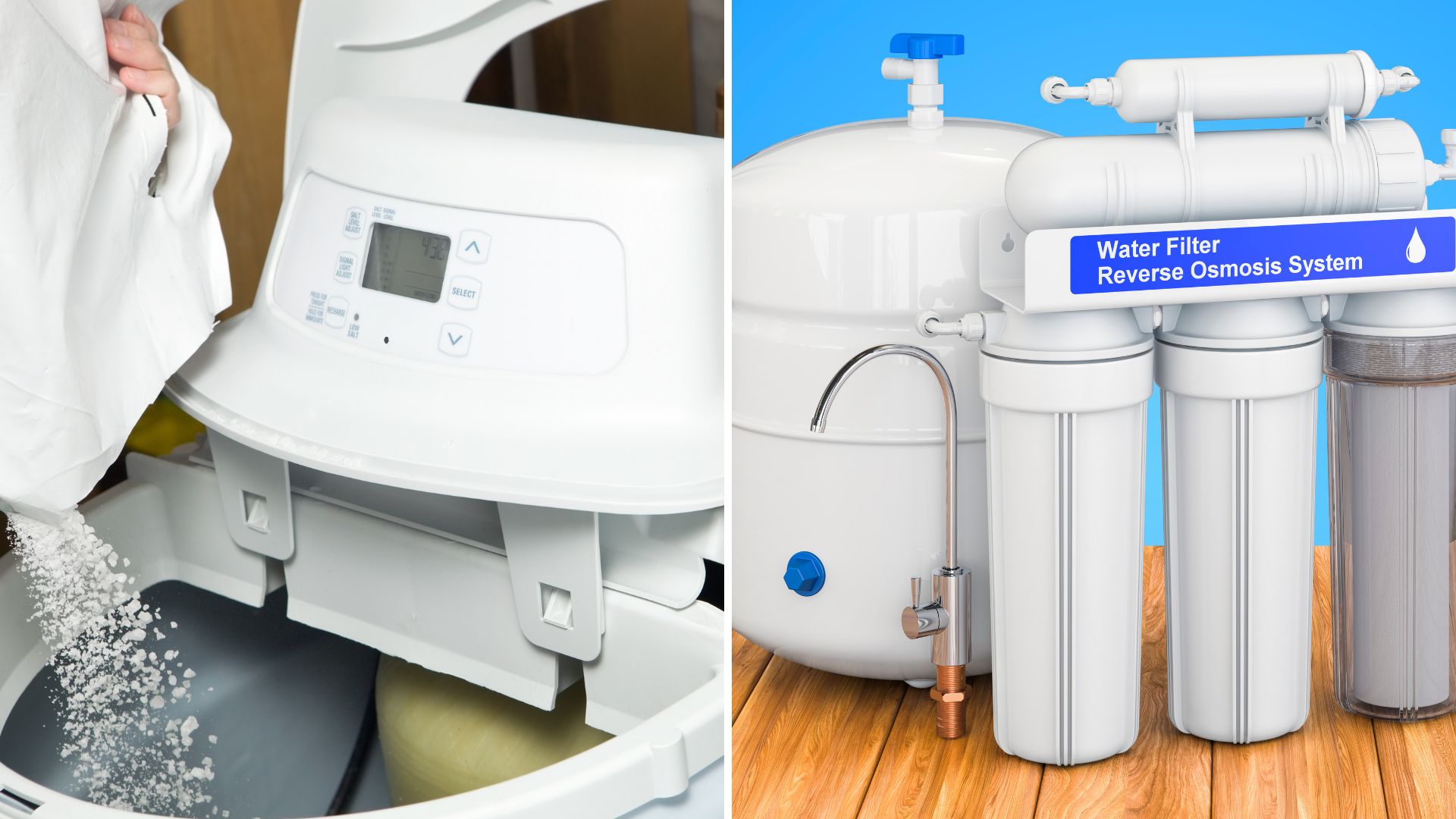
A water softener removes the calcium and magnesium that cause hard water, so it’s the fix for scale, spotty dishes, and soap that won’t lather. A water filter removes contaminants and improves taste and odor, but it doesn’t soften your water. If the problem you can see is chalky buildup, which is common in Brighton, you most likely need a softener. If the problem is taste, smell, or a specific contaminant, you need a filter. Plenty of homes end up with both, and the best way to decide is to test your water first.
The Short Version
Softener: Fixes hardness. That means scale on faucets, crusty showerheads, cloudy glassware, and buildup inside your water heater.
Filter: Fixes taste, odor, and certain contaminants, depending on the type. It doesn’t remove the minerals that cause hardness.
The mix up between the two is the most common reason homeowners spend money on the wrong equipment. A filter on the kitchen tap won’t stop scale from building up on your water heater, and a softener won’t fix a chlorine taste.
What a Water Softener Actually Does
Hardness comes from dissolved calcium and magnesium. The U.S. Geological Survey explains that hard water leaves residue, reduces soap performance, and causes mineral buildup in plumbing, fixtures, and water heaters. When hard water is heated, it forms scale, which can reduce equipment life, lower water heater efficiency, and clog pipes. USGS also notes that hard water isn’t a health concern, though it can be a nuisance. You can see their hardness scale and explanation here.
A traditional softener swaps those minerals out through a process called ion exchange. The unit periodically flushes itself with salt brine to recharge, which is why you add salt to it. The EPA’s WaterSense guide notes a few things worth knowing before you buy:
Softeners use water. They use water during their regeneration cycles. A voluntary NSF/ANSI 44 rating requires efficient softeners to use 5.0 gallons of water or fewer per 1,000 grains of hardness removed, so efficiency is something to ask about.
They discharge salt. Some local jurisdictions restrict that, so it’s worth checking local rules.
Sizing matters. A unit that’s too small or set up wrong wastes salt and water, and doesn’t soften as well as it should.
What a Water Filter Actually Does
Filters use physical barriers, activated carbon, or resins to trap contaminants. According to the EPA, carbon filters are relatively inexpensive, improve taste and odor, and can reduce some chlorination byproducts, solvents, and pesticides. They don’t use water to do it.
What carbon filters don’t do is just as important. The EPA says they don’t remove nitrates, bacteria, or dissolved minerals, which means they won’t address hardness. If you’re looking at filters, the EPA suggests looking for NSF/ANSI 42, 53, or 401 certification.
The CDC adds two practical points. First, no filter removes everything, so you should pick one for the specific contaminant you’re concerned about, and look for NSF certification on the label. Second, filters need maintenance, because a neglected cartridge can let germs grow in it. Follow the manufacturer’s replacement schedule. You can read more in the CDC’s guide to choosing home water filters.
What About Reverse Osmosis?
Reverse osmosis (RO) is a different kind of filter, usually installed at a single tap. It pushes water through a membrane that rejects many dissolved contaminants, and it also removes beneficial minerals like calcium. The EPA notes it produces reject water, with typical point of use units wasting at least five gallons per gallon treated, though WaterSense labeled models cap that at 2.3 gallons. RO is a good fit for drinking and cooking water, but it isn’t a whole house fix for hardness.
Which One Does a Brighton Home Need?
Livingston County has hard water. Brighton’s water has been reported at approximately 25 to 27 grains per gallon, according to the City of Brighton, as we covered in our post on whether Brighton water is hard. For context, USGS calls anything above 180 milligrams per liter “very hard,” which works out to about 10.5 grains per gallon. That puts Brighton well beyond the line.
For most homes on that kind of water, the pattern is straightforward:
Chalky buildup, spotty dishes, scale on fixtures, soap that won’t lather. That’s hardness, and a softener is the usual answer.
Chlorine taste or smell. That’s a filter job. A carbon filter is designed for it.
A specific contaminant you’re worried about. Test your water, then choose a filter certified for that contaminant. A softener isn’t designed to treat it.
Both hardness and taste problems. This is common, and it’s why many homes pair a whole house softener with a drinking water filter or RO unit at the kitchen sink.
Test Before You Buy
The EPA’s guidance starts with testing. It says it’s important to identify your treatment goals first, using test results, your utility’s water quality report, or your own experience. City water customers should receive a water quality report each summer. If you’re on a private well, the EPA recommends having your water tested periodically by a state certified lab, and the results can be very different from city water.
The CDC also warns not to judge water by taste and smell alone, since some harmful substances don’t change either. Testing takes out the guesswork and keeps you from buying equipment for the wrong problem.
Common Mistakes to Avoid
Buying a filter to fix scale. Standard filters don’t remove the hardness minerals.
Buying a softener to fix taste or a health concern. A softener is built to remove hardness, not to treat contaminants.
Skipping the sizing step. A softener should be sized for your actual hardness and your household’s water use.
Forgetting maintenance. Softeners need salt, and filters need new cartridges on schedule.
How Mission Ready Plumbing Can Help
At Mission Ready Plumbing, we’ve got over 25 years of experience serving Brighton and Livingston County, and we’re licensed and insured. Water conditioning is one of our core services, and that includes water softeners and treatment solutions to improve the quality of your home’s water.
If you’re not sure what your home needs, we’ll start with the problem you’re seeing and help you figure out the right fit. Give us a call at (810) 623-2090.
Frequently Asked Questions
Do I need a water softener or a water filter?
It depends on the problem. If you’re dealing with scale, spotty dishes, or soap that won’t lather, that’s hard water, and a softener is the usual fix. If it’s taste, smell, or a particular contaminant, you need a filter. Many homes use both.
Does a water filter soften water?
No. Most filters, including standard carbon filters, don’t remove the dissolved minerals that cause hardness. They improve taste and odor and reduce certain contaminants, but scale will still form.
Does a water softener make water safe to drink?
No. A softener is designed to remove hardness minerals, not to treat contaminants. Hard water isn’t generally a health concern, so softening is mostly about protecting your plumbing and appliances. If you’re worried about a contaminant, test your water and choose a filter certified for it.
Is Brighton water hard?
Yes. The City of Brighton has reported hardness of approximately 25 to 27 grains per gallon. That’s well above the point where water is considered very hard. Hardness can vary by location, so testing is the best way to know what’s in your tap.
Can I use a water softener and a filter together?
Yes, and it’s common. A softener handles hardness for the whole house, and a filter or reverse osmosis system at the kitchen tap improves drinking water. They solve different problems, so they work well together.
How often do water softeners and filters need maintenance?
Softeners need salt added regularly, and a periodic check to make sure they’re regenerating properly. Filters need cartridges replaced on the manufacturer’s schedule, since an old cartridge can stop working and let germs grow. We can walk you through what your system needs.
Should I test my water before installing a water softener?
Yes. Testing tells you how hard your water is and whether there are other issues a softener won’t fix. City water customers can check their annual water quality report, and well owners should use a state certified lab. Then we can size the system correctly.
Mission Ready Plumbing is a veteran owned and operated plumbing company with over 25 years of experience, serving Southeast Michigan including Livingston County, Oakland County, Washtenaw County, and more.